

Danish Christmas baking includes crisp butter cookies, spiced pebernødder, thin brunkager, and fried klejner. I live in Denmark, and these flavors are a familiar part of the season here. This roundup keeps twelve linked cookie and treat recipes together so you can choose what to bake, plan the ingredients, and follow the full method at its source.
This is a recipe roundup: each linked recipe provides the full ingredient list and method. You’ll find Danish favorites such as vaniljekranse, brunkager, pebernødder, and klejner, alongside other festive treats and a no-bake biscuit cake.
Choose Your Baking Project at a Glance
| Recipe below | Texture or style | The planning detail |
|---|---|---|
| 1. Vaniljekranse | Crisp, ridged vanilla wreaths | Needs a sturdy piping bag and star tip; check dough consistency. |
| 2. Brunkager | Thin, crisp and warmly spiced | Plan for the dough’s rest and even slicing through nuts. |
| 3. Smør Bullar | Crumbly, powdered-sugar snowballs | Allow the cooling and coating stages in the linked method. |
| 4. Pebernødder | Small spiced cookies | Keep the rolled and cut pieces an even size. |
| 5. Honey and Spice | Spiced, nut-flavored cutouts | Have a rolling pin and cutter ready. |
| 6. Almond Sugar | Rectangles with a crisp topping | The almonds and sugar go on top; check egg and nut needs. |
| 7. Klejner | Fried, twisted dough | Allow shaping time; an adult manages the hot oil. |
| 8. Cinnamon Sugar | Simple cutouts with a crunchy finish | A good cutter-and-sprinkle project; check the recipe’s large yield. |
| 9. Citrus Twist Fritters | Fried twists with citrus and cardamom | Choose instead of, rather than alongside, another labor-intensive fried batch. |
| 10. Alternative Butter Cookies | Hand-shaped rounds; a chewier style | No piping required; optional cherry centers. |
| 11. Kjeldsens Look-Alike | Crisp butter cookies in shaped forms | Allow time to shape and apply the sugar finish. |
| 12. Kiksekage | Chilled chocolate biscuit cake | No oven, but needs chilling space and the egg-safety precautions below. |
For a varied first plate, choose one butter cookie, one spiced cookie and one different texture. For example: vaniljekranse, brunkager and smør bullar. If you want a simpler shaping session, swap the piped wreaths for hand-shaped butter cookies. Read the linked recipes before shopping; this table compares their methods and does not replace their ingredient quantities or cooking instructions.
1. Vaniljekranse or Danish Butter Cookies
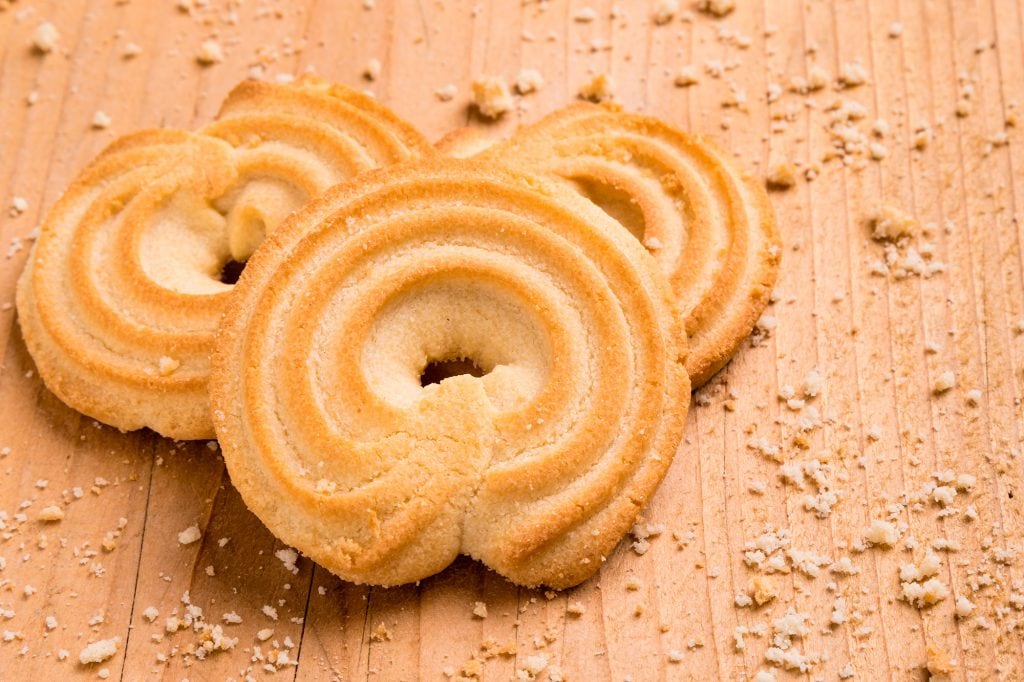
Vaniljekranse means vanilla wreaths: crisp Danish butter cookies piped into small rings with a star tip. Their ridged shape distinguishes them from the rolled, sliced, and hand-shaped cookies below. Choose these when you want to practice piping and have a sturdy piping bag and suitable nozzle ready.
Vanilla bean leaves tiny dark flecks in the dough, while the almonds add flavor and texture. Use the butter and ingredient quantities specified in the recipe, and bring the butter to the consistency it calls for so the dough is easier to pipe. These wreaths are lovely with a hot drink at Christmas or at another time of year.
Tins from brands such as Royal Dansk have made Danish butter cookies familiar far beyond Denmark. For the wreath-shaped version, follow Vaniljekranse for the full quantities and method. Let the cookies cool before packing them, and use the recipe’s storage guidance rather than assuming every homemade butter cookie keeps for the same length of time.
2. Brunkager or Danish Brown Cookies

Brunkager means brown cookies. These thin, crisp slices get their color and flavor from brown sugar, syrup, and warm spices. They offer a stronger spice profile than vanilla wreaths and make a good contrast on a mixed Christmas cookie plate.
The linked version combines cinnamon, ginger, cloves, and allspice with whole almonds and pistachio kernels. It also uses potash, a traditional raising agent; check that ingredient before shopping, or read the author’s note about a baking-soda substitution. Plan ahead: the dough rests until the next day, then is cut into logs and thin slices. A sharp knife is useful for cutting evenly through the firm dough and nuts. Serve the finished cookies with afternoon tea or alongside dessert.
3. Smør Bullar

These little round cookies look like snowballs after a generous dusting of powdered sugar. The name smør bullar is familiar to some Danish-American families, although it is less familiar here in Denmark. To me, it sounds partly Swedish: smør is Danish for butter, while bullar is Swedish for buns. Whatever your family calls them, their crumbly texture and snowy coating make them a festive addition to a cookie plate.
The smør bullar recipe and family story describe a buttery dough made with butter, flour, powdered sugar, vanilla, and pecans, with another coating of powdered sugar after baking. They are a lovely contrast to thin, crisp brunkager and warmly spiced pebernødder. Let them cool as the recipe directs before the final coating so they keep their snowball appearance.
4. Pebernødder Cookies

Pebernødder means pepper nuts: small, round cookies with a warm mixture of spices. Their size varies between recipes; aim for the dimensions in the method you are following so the cooking time suits your cookies. In the pebernødder recipe linked here, the dough is rolled into thin ropes, cut into little pieces, and shaped before baking. Keeping the pieces an even size helps them bake evenly.
Cinnamon, cardamom, ginger, cloves, and pepper can all appear in pebernødder recipes. The exact mixture varies: some use white pepper, while others use different combinations. Follow the quantities in your chosen recipe for a balanced flavor, then make a note of the version your family enjoys. These little cookies are especially good with tea or coffee, and a small bowl on the table is an inviting way to share them during a Christmas visit.
5. Honey and Spice Cookies

The honey and spice cookies combine honey and muscovado sugar with allspice, ginger, cloves, and cinnamon. Hazelnuts give them a different nut flavor from almond-rich brunkager and vanilla wreaths. Choose them for a warmly spiced cutout cookie rather than another plain butter-cookie variation.
Have a rolling pin and cookie cutter ready. The linked method uses small rounds; festive stars can also be fun, but keep the dough thickness and cookie size close to the recipe so its baking guidance remains useful. This is a good option when you want a shaping activity without the piping bag needed for vaniljekranse.
6. Almond Sugar Cookies

These almond sugar cookies are cut into rectangles and finished with almonds and sugar on top. Their decoration comes from that crisp topping, making them a useful choice when you want a finished-looking cookie without mixing icing or piping intricate shapes.
In the linked Almond Sugar Cookies recipe, the rolled dough is brushed with egg wash and scattered with chopped almonds and sugar before cutting and baking. The almonds belong in the topping rather than being mixed through the dough. You can serve the rectangles on their own or follow the suggested raspberry-jam sandwich variation. Check nut and egg allergies before choosing them for a shared plate.
7. Klejner or Danish Fried Twists

Klejner are Danish fried twists, traditionally served during the Christmas season. Cardamom flavors the dough, with lemon zest as an optional addition in the linked recipe. Choose these when you have time for both shaping and frying, rather than expecting an oven-baked cookie.
To form the familiar twist, cut the rolled dough into diamonds, make a slit in each center, and pull one pointed end through the opening. The linked recipe rests the dough in the fridge for about an hour; shaping a full batch can take another hour. That makes klejner better suited to a leisurely baking session than a last-minute tray of treats.
Follow the dimensions and oil temperature in the Klejner Cookies recipe, using a suitable cooking thermometer. Keeping the pieces similar in size helps them cook evenly. Children can help shape the cool dough, but an adult should handle the hot oil. Let the fried twists cool enough to eat safely; they are especially enjoyable while still a little warm.
8. Cinnamon Sugar Cookies

These cinnamon sugar cookies are rolled and cut into stars or circles, then sprinkled with cinnamon and coarse sugar before baking. The flavor is simpler than the four-spice mixture in brunkager or the honey-and-hazelnut cookies. A rolling pin and small cutter are the main shaping tools.
The linked Danish cinnamon sugar cookie recipe makes a large batch, so check the yield and available baking trays before starting. Its cinnamon-sugar topping adds crunch without an icing stage. Choose this option when you want children to help with cutters and sprinkling, and keep the shapes and thickness consistent for even baking.
9. Citrus Twist Fritters

Citrus Twist Fritters bring together cardamom with both orange and lemon zest. Like klejner, they are cut, twisted, and deep-fried, but the two citrus zests give this version its particular character. They offer a fragrant contrast to the deeper spices of brunkager and the simpler vanilla flavor of butter cookies.
These citrus twists are fried treats, so plan for an adult to remain at the stove throughout cooking. Follow the linked recipe for the oil temperature and cooking time, using a suitable cooking thermometer. Children can help measure ingredients and shape the dough before frying; let the cooked pieces cool enough to handle before serving.
10. Alternative Danish Butter Cookies

This version uses four egg yolks and two sticks of butter. The dough is rolled into small balls, coated in sugar, and flattened, with an optional maraschino cherry in the middle. That hand-shaped method makes it an alternative to piped vanilla wreaths. The recipe’s test-kitchen notes describe a chewy texture, so choose it when you prefer that style to a thin, crisp cookie.
The Danish Butter Cookies dough is thick, and the recipe’s testers finished mixing it by hand. Read the full method before starting and measure carefully rather than adding extra liquid simply to loosen it. The cherry gives each cookie a colorful center; the recipe also allows you to leave it off. These are suitable for Christmas baking or another occasion when you want a simple shaped cookie.
11. Kjeldsens Danish Butter Cookies Look-Alike

This Kjeldsens Danish Butter Cookie is included for its pretzel-style shapes, crisp texture, and sugar topping. It is another way to present a butter cookie alongside piped wreaths or cherry-topped rounds. The demerara-sugar finish gives the tops a distinct texture and appearance.
The recipe description uses butter, egg yolks, flour, milk powder, and vanilla essence, with an egg wash and demerara sugar on top. If the dough becomes too soft to shape, a short chill can make it easier to handle. Read the linked method for its quantities and baking guidance before starting, and allow time for shaping as well as baking. Serve with milk, tea, or coffee.
12. Danish Chocolate Biscuit Cake or Kiksekage

This is a no-bake Danish chocolate biscuit cake also known as a Danish Kiksekage. It is made using vanilla biscuits and literally means biscuit cake. It takes 5 different ingredients to make this cake with butter, chocolate, sugar, egg yolks, and biscuits. This no-bake recipe means that it will not be popped into the oven. It is merely assembled in the pan and left in the fridge until solid.
Egg safety: Adding raw egg yolks to melted chocolate does not guarantee that they have been thoroughly cooked. For a no-bake kiksekage made with eggs, use pasteurized eggs or pasteurized egg products and follow the recipe’s refrigeration instructions. The FDA recommends pasteurized eggs for recipes served with raw or undercooked eggs. You can also choose an egg-free recipe.
Let the Baking Begin!
This collection brings together Danish favorites, other festive cookies, fried twists, and a no-bake biscuit cake. Choose a few contrasting flavors and methods to suit the time you have. Children can enjoy watching butter being creamed, measuring ingredients, and shaping suitable doughs with cutters. Baking together also gives you a chance to pass on family recipes and the practical cooking skills that go with them.
Plan a Manageable Baking Session
- Choose two or three contrasting treats rather than attempting all twelve at once.
- Read the full recipes first and note chilling, shaping, frying, and cooling time.
- Check butter, eggs, nuts, and other allergens before baking for guests.
- Keep crisp cookies separate from softer treats and follow each recipe’s storage guidance.
- Let children help with suitable measuring and shaping while an adult handles hot trays and oil.
For a Danish craft-and-baking afternoon, add woven paper hearts. Learn more about the season in the Denmark Christmas guide.


 12 Classic Christmas Cartoons to Watch with Your Kids

