

What is a Christmas Cactus?
A Christmas cactus is a tropical cactus grown for its segmented, arching stems and colorful tubular flowers, often in shades of pink, red, or lilac. It belongs to the genus Schlumbergera in the cactus family. Holiday cacti come from Brazilian forest habitats, where they grow with different conditions from desert cacti. Unlike desert cacti, they are not suited to prolonged dry soil and hot, direct sun. Their common names reflect familiar flowering seasons in the Northern Hemisphere, but shop labels and flowering dates can overlap. The flat green parts often called leaves are actually stem segments. These plants need a freely draining growing medium, bright indirect light, and watering adjusted to the season.
Why is My Christmas Cactus Limp?

A Christmas cactus that suddenly looks shriveled or limp needs a closer look, even if it has been growing well for years. The symptom does not identify one cause on its own. A very dry root ball, persistently wet compost, damaged roots, strong sunlight, and temperature stress can all contribute. Work through the checks below before choosing a treatment; adding more water without checking the pot can make a wet-root problem worse.
First, check moisture below the surface of the potting mix. If it feels dry and the pot is unusually light, lack of water is a possibility. If it remains wet and heavy, inspect drainage and look for soft tissue at the base. A moisture meter is optional, rather than essential. Flowering does not rule out either problem: do not assume limp stems are simply the result of the plant putting all its energy into flowers. Also distinguish normal trailing growth from stems that have newly become thin, wrinkled, or soft.
How Can I Correct This Problem?

Begin with the condition you actually find. If the plant is flowering, you can still correct watering, remove standing water from the outer pot, and move it away from damaging heat. Do not postpone a serious root or drainage problem until the last flower has finished. Avoid feeding a stressed plant in an attempt to force a quick recovery. Once the problem is corrected, give it a stable position and watch for improved firmness or healthy new growth.
If the root ball is dry, water thoroughly and allow the excess to drain. Empty the saucer or decorative outer pot. A very dry mix can repel water, so check that the root ball has actually become moist rather than letting water run straight down the sides. Rewet it carefully if needed, then allow drainage again. Afterward, check the mix before watering; do not keep adding small amounts every day just because the stems have not recovered immediately.
If the compost is soggy, stop adding water and check whether drainage holes are blocked or the pot is standing in water. Persistent wilting in wet soil may mean damaged roots. Gently take the plant out if inspection is needed. Trim clearly rotten, mushy roots with clean tools and repot into a suitable freely draining mix. Routine hydrogen peroxide treatment is not necessary. Match the pot to the remaining root system: a much larger container can hold more wet compost than the roots can use. Repot to solve a specific problem rather than as an automatic response to every drooping stem.
Compacted or deteriorated potting mix may also need replacing. Check whether water moves through the pot and whether roots have enough air around them. Use a suitable houseplant mix improved for drainage, or a prepared mix intended for this type of forest cactus. Avoid packing the new material tightly. Healthy roots do not need to be disturbed repeatedly, so give the plant time to respond after one well-chosen change.
What are Other Common Christmas Cactus Problems?
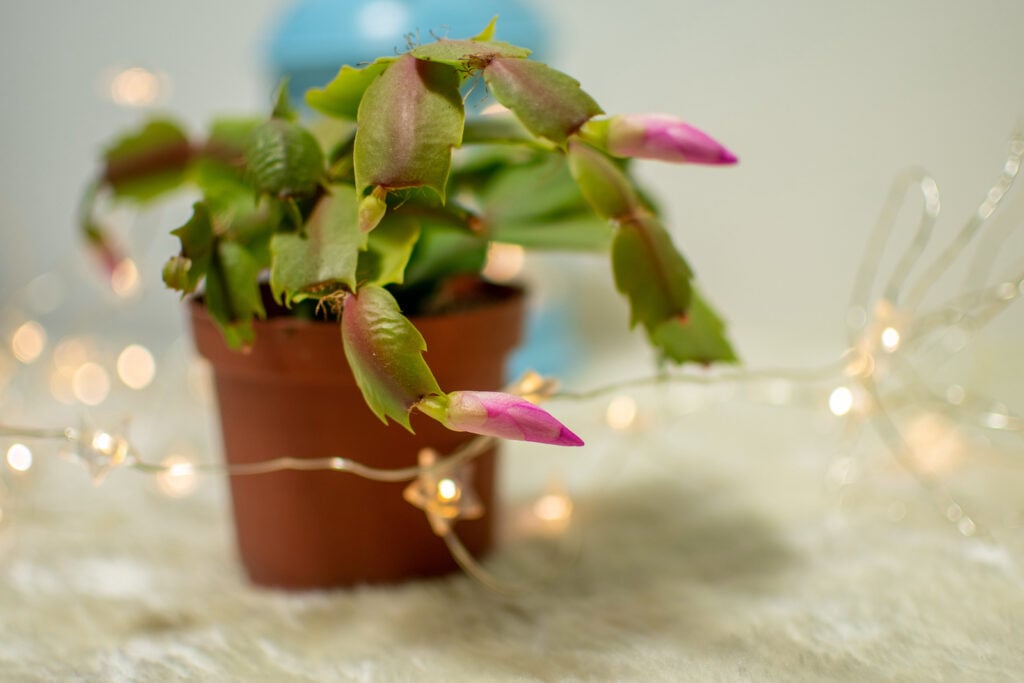
Pale or reddish stem segments can indicate stress, including too much direct sun, although color alone is not a diagnosis. Look at the plant’s recent conditions: has it moved into a hot window, sat near a radiator, or dried out during warm weather? Bright indirect light is a good starting point. Move a stressed plant out of hot direct sun and check the root ball as well. A naturally reddish edge is different from widespread scorching or collapsing tissue.
Falling segments can follow root or stem rot, physical damage, or other stress. Inspect the base for soft, dark tissue and check the pot for persistent moisture. Do not assume that a detached segment always means the plant needs more water. If one part is damaged but other stems remain firm and healthy, suitable cuttings may offer a way to preserve the plant. Keep any suspect rotten material away from the healthy cuttings.
Bud drop can follow changes in watering, temperature, light, or position. A newly purchased plant may react to the journey from a nursery or shop to a home. Keep it in a stable place with bright indirect light, away from drafts and heaters, and check moisture regularly. Consistent care means responding to the potting mix, rather than watering on a rigid timetable. Some plants flower again, but a second flush is not guaranteed. Let the plant settle rather than repeatedly moving, feeding, and repotting it.
Where to Keep a Christmas Cactus
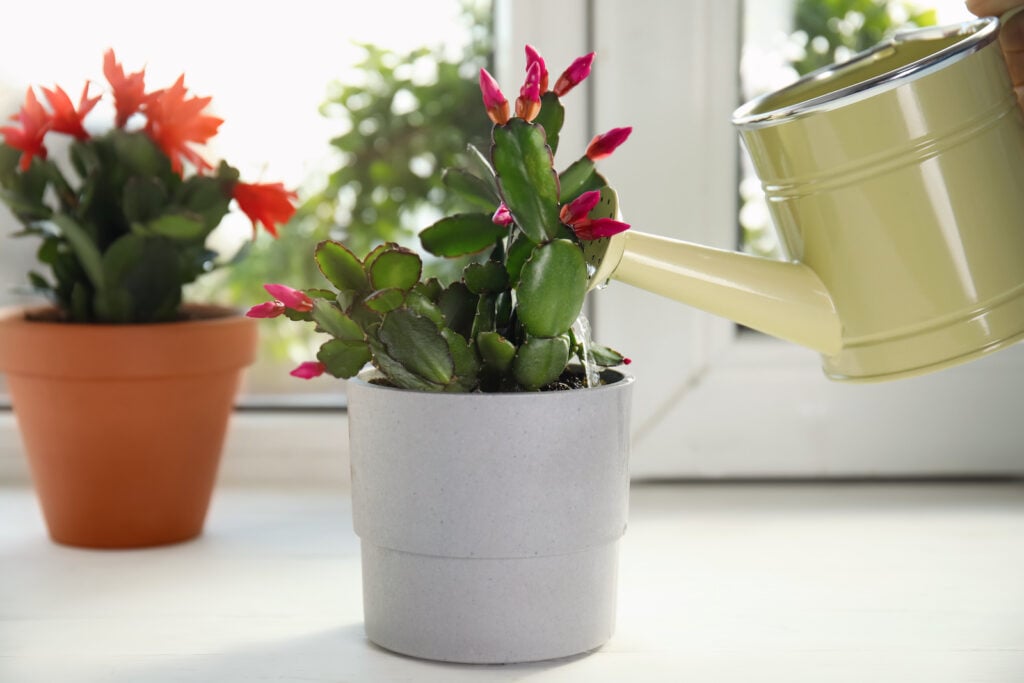
Choose a pot with drainage holes and a growing medium that holds some moisture without remaining waterlogged. A decorative cover is fine only if you remove trapped water after watering. Check the pot’s size before moving up: a small root system in a large volume of wet compost can struggle. During active growth, water and feed according to the plant’s condition and the product directions. Cooler rest periods usually call for less water, but not prolonged complete drying.
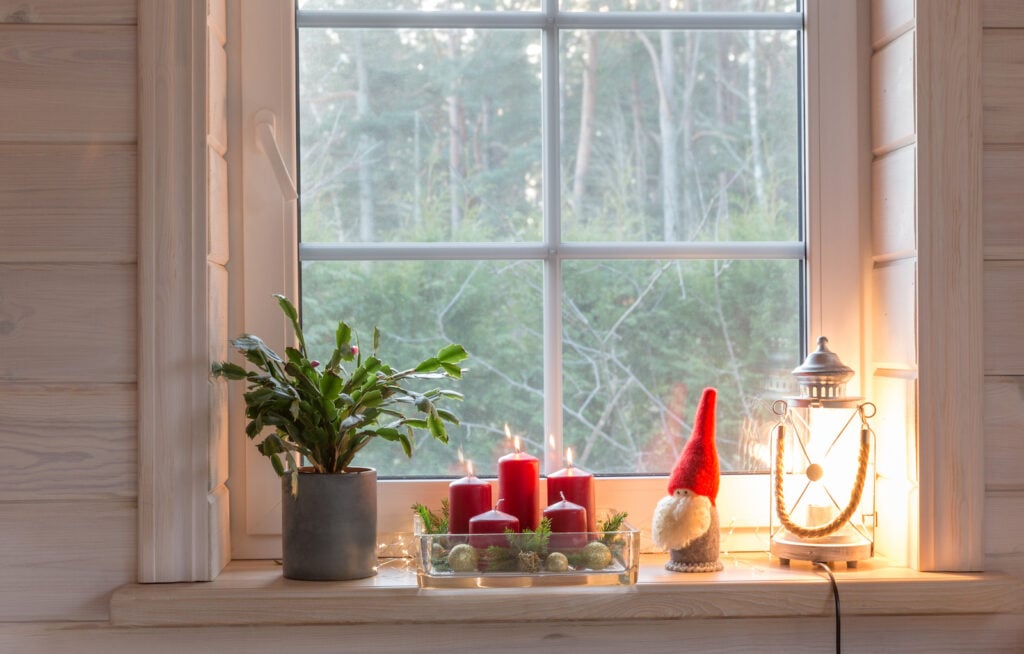
Place the cactus in bright indirect light. A suitable east-facing window or a bright bathroom can work, while a very hot south-facing position may need shading. These forest cacti appreciate humidity, so avoid the drying air beside a radiator. Daytime temperatures around 65–70°F (18–21°C), with cooler nights around 55–65°F (13–18°C), provide a useful guide; a cooler autumn period and uninterrupted nights can help encourage buds. Keep conditions stable once buds develop. If the plant spends summer outdoors, use a sheltered shaded position and bring it in before nights turn cold. Check for pests before returning it to other houseplants.
A Recovery Checklist You Can Follow
- Check the root ball and drainage before deciding to water.
- Correct the specific dry-soil, wet-root, or heat problem you find.
- Keep the plant in a stable position and avoid extra fertilizer while it is stressed.
- Look for firm tissue and new growth over time rather than expecting every old segment to recover immediately.
How Quickly Should a Limp Cactus Recover?
A thirsty plant with healthy roots may respond sooner than one that has lost roots to rot. The cause and severity matter, so there is no reliable fixed recovery deadline. If the base keeps softening or the plant continues to collapse, inspect it again instead of simply repeating the watering treatment.
For identification, compare Christmas, Thanksgiving, and Easter cacti. For a broader display, see Christmas flowers and plants.
What to Record While the Plant Recovers
Note when you watered, whether the mix was dry or wet beforehand, and any recent move near a heater or window. A simple photo can help you compare stem firmness and new growth over time. This is more useful than making several changes at once and losing track of what happened.
If the pot remains heavy and wet, adding more water is unlikely to solve the wilt. If it dries unusually fast, check the root ball and the pot’s size. Adjust to those observations rather than assuming all Christmas cacti need the same number of days between waterings.


 25 Gift Ideas: I Don’t Know What I Want for Christmas

