

A fresh real Christmas tree can often remain presentable for about four to five weeks indoors with good care, but there is no guaranteed lifespan. Species, harvest date, storage, room heat, and water supply all affect the result. Buy for your planned display period and judge the condition of the actual tree rather than relying only on a number of days.
There is nothing quite like bringing home a real tree: the fresh scent, the branches waiting for decorations, and the warmth it adds to a room. Whether you cut your own or choose a precut tree, a little care from the journey home onward helps that festive display last.
How Long Will My Real Christmas Tree Last?
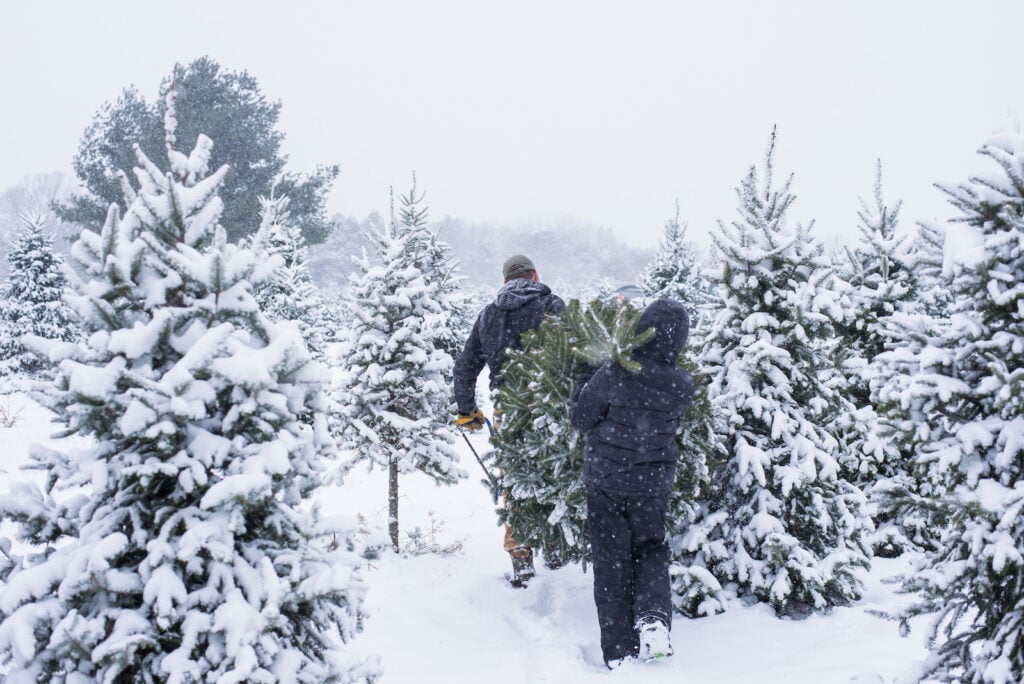
When planning your decorations, work backward from the days when you most want the tree to look its best. A freshly cut, well-watered tree may give you four to five weeks of display, but a tree already drying at purchase will have less time. If you decorate the house in November, you can add the real tree in early December as the final touch. Its condition matters more than stretching the display for an extra week.
What to Look For in a Real Tree

Choose a tree with flexible needles and good needle retention. Avoid widespread brittle foliage, excessive shedding, or clear signs of drying. A fresh scent is pleasant but does not prove freshness by itself. Ask when the tree was cut and how it has been stored. A local tree farm can be useful, but a well-handled precut tree may also be a good choice. Look over the whole tree, check that its size fits your room and stand, and avoid damaging branches while testing the needles gently.
There are some species of tree that are best for use as a Christmas tree in your home. Most trees will last about a month, but some superior trees have better needle retention and will last longer. These trees include Fraser Fir, Concolor Fir, Canaan Fir, and White Pine.
How to Store a Real Tree Safely

Use suitable netting or wrapping to protect branches during transport, and secure the tree according to your vehicle and carrier instructions. Make sure it cannot move or obstruct your view. If it will wait before coming indoors, keep it somewhere cool and sheltered with the cut base in water. Do not leave it lying in a warm garage for several days and expect indoor watering to reverse all the drying.
How to Care For Your Real Tree
Once your tree is cut, it begins to wilt and lose color. This is why it is essential to care for your tree correctly.
Water

Check the stand’s water level every day and more often when uptake is high, especially just after setting up the tree. Keep the cut end submerged at all times. A useful capacity guide is about one US quart of water per inch of trunk diameter (roughly one litre per 2.5 cm), but actual use varies: this is not a fixed daily dose to pour in regardless of the level. A four-inch trunk therefore needs a stand with generous water capacity, not an automatic four-quart daily addition. Use plain water and top it up as needed; avoid homemade sugar or bleach mixtures.
Heat

Keep the tree at least 3 feet (about 1 metre) from fireplaces, wood stoves, radiators, and other heat sources. Heat speeds drying, and a tree beside a flame presents a fire risk. Choose a cooler position with room to reach the water stand. A humidifier may make a dry room more comfortable, but it cannot replace watering or safe placement.
Trim the Tree

Before putting the tree in its stand, make a straight fresh cut across the base, removing about 1 cm, or roughly half an inch. Do not shave the sides to fit a stand that is too small: the outer wood is important for water uptake. Use a stable stand suitable for the trunk and follow its instructions. Drilling extra holes does not improve water uptake. Get the freshly cut base into water promptly.
A tree seller may be able to make the fresh cut for you. If the tree waits before setup, keep the base in water in a cool place and assess whether another fresh cut is needed before it goes into its stand. There is no need to keep a tree outdoors for several days as a compulsory step. The aim is to limit drying between harvest, transport, and display.
What to Do With Your Real Christmas Tree

When you are finished with your tree as a Christmas decoration, there are some great ways to use your tree after it has lived out its life as a decoration in your home. First, you can leave it in your backyard to provide shelter for the animals. There are chipmunks, squirrels, and birds living in or visiting your backyard. These animals can benefit from the additional shelter. Second, you can lean your Christmas tree up against your fence or another tree. You want to make sure you place it in an area far away from your house. You do not want the animals to attempt to get into your home.

You can use your old Christmas tree as mulch around your house. In addition, you can use the tree for mulch in your garden to help keep your perennials warm when it gets cold. All you have to do is clip small tree branches and lay the branches around the top soil of your plants. This helps to keep the roots warm. Using the tree as mulch can also help the plants retain water. Another way to use the tree as mulch is to take a branch and shake it over the soil, so the needles fall off on the soil. If the needles do not come off easily, let the tree sit for another day without water. This allows it to dry out, even more, so the needles will fall off easier.

Check your local tree collection and recycling arrangements. Remove all decorations, hooks, lights, and tinsel before putting the tree out, and follow any rules for netting, stands, or flocked trees. Take a dry tree out of the house promptly rather than keeping it until a preferred calendar date. Do not burn a dry Christmas tree in an indoor fireplace; needles and branches can burn rapidly.
When Should You Take the Tree Down?
Look for increasingly brittle needles, substantial shedding, and dry branches. A tree that stops taking up much water may already be drying, so consider the foliage as well as the stand. Remove a clearly dry tree even if Christmas has not yet arrived. Keeping a tree watered helps limit drying; it does not make the tree fireproof.
Before You Add the Decorations
- Position the stand away from heaters, fireplaces, and other heat sources.
- Check light sets for damage and use products intended for their location.
- Keep real flames away from the tree and switch decorative lights off before bed or leaving home.
- Leave access to the stand so checking and topping up water remains easy.
Continue with the step-by-step tree decorating guide or Christmas decorating on a budget.


 The Difference Between Christmas and Xmas

