
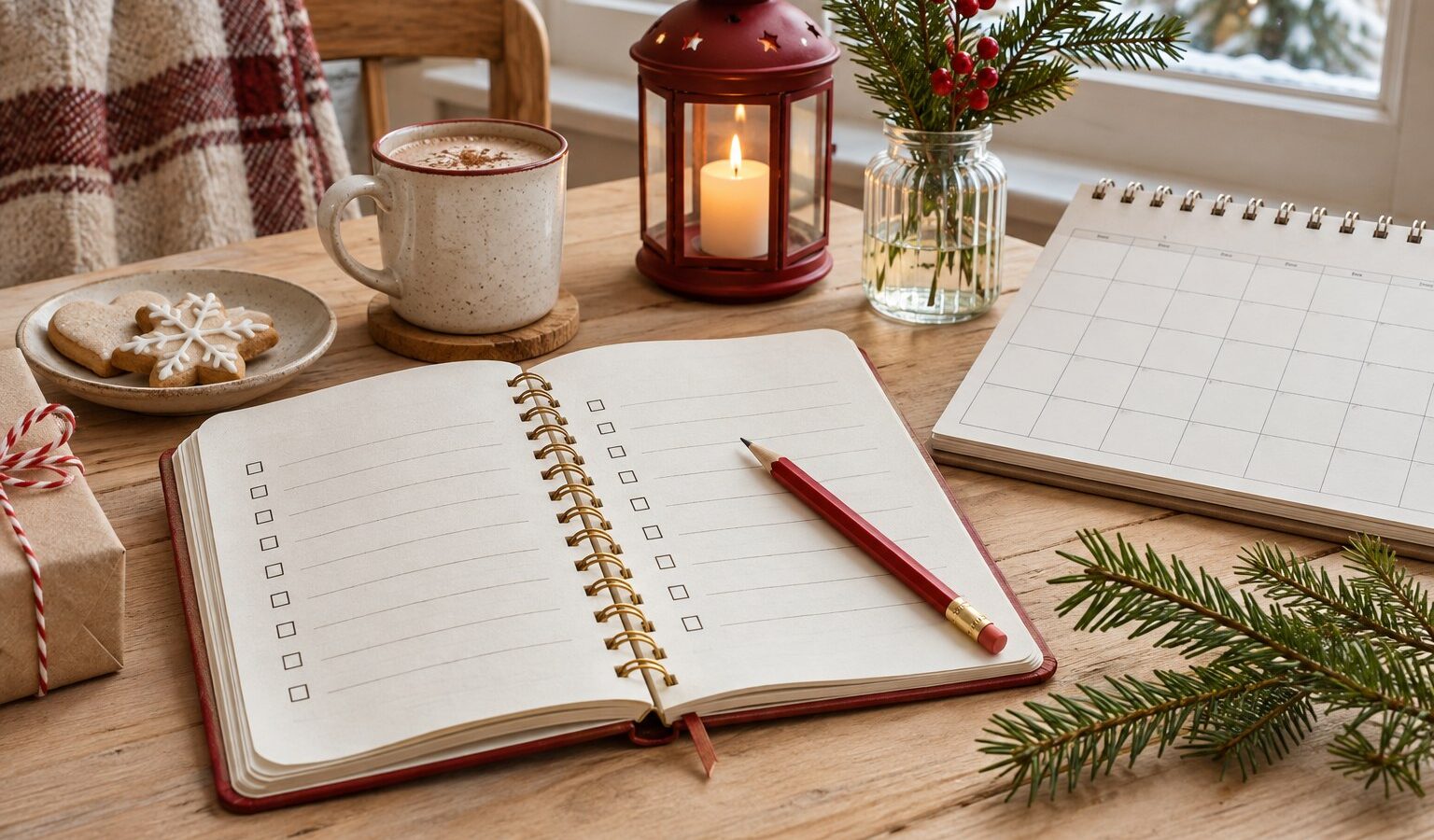
A Christmas planning checklist is most useful when it reflects the Christmas you actually want. Before filling a calendar, decide what matters to your household: a shared meal, a few familiar decorations, time with relatives, a quiet day at home, or a mixture of these. A shorter list of priorities makes the practical decisions easier.
Use the guide below as a working plan for November. You do not need to complete every task in one weekend. Put dates, a spending limit, and the next few actions in one place, then revisit the plan once a week. Leave some empty space for ordinary life and last-minute changes.
Start with Three Priorities
Ask each person in the household to name one thing they would particularly like to do. Write the answers down before browsing ideas or buying supplies. You may discover that everyone cares about the same simple tradition, such as decorating together or watching a favorite film.
Choose three priorities for the household as a whole. These become the first items in the calendar and budget. Everything else is optional. If a new idea would crowd out something on that short list, decide which one matters more rather than quietly adding both.
Put the Fixed Dates in One Calendar
Begin with commitments that other people set: school events, work gatherings, travel, visitors, and any dates by which gifts need to be ready. Record the actual arrangements you know, and mark uncertain ones as provisional. A penciled question mark is more useful than an assumption.
- Who is visiting, staying overnight, or hosting a meal?
- Which days are already occupied by work or school events?
- When will gifts need to be exchanged, posted, or carried on a journey?
- What preparation depends on someone else’s reply?
Add preparation time around the commitments. A meal for guests needs planning and shopping time; a handmade gift needs drying, finishing, and wrapping time. Those small blocks are easy to forget when only the celebrations appear in the calendar.
Set a Complete Spending Limit
Include the costs that can disappear between the obvious purchases: wrapping materials, cards, postage, ingredients, transport, and small contributions to shared events. Separate the money you have available from amounts you hope might become available later.
Give each category a provisional limit, then keep a running record of what you spend. If one category grows, deliberately reduce another. Our guide to Christmas gift shopping on a budget can help you turn a long recipient list into a manageable plan.
Check What You Already Own
Open the decoration and wrapping boxes before buying anything. Check whether the tree stand, hooks, gift bags, and storage containers are usable. Make a small repair pile and a separate list of genuine gaps. A missing packet of hooks is a different problem from a whole new decorating scheme.
For gifts, record what has already been bought or made, where it is stored, and what remains to be done. Keep the record somewhere that will not spoil surprises. A simple table with recipient, idea, budget, purchased, and wrapped columns is enough.
Plan the Food Around Your Real Schedule
List the meals you are responsible for and how many people you expect. Ask about dietary needs directly instead of guessing. Then note what kitchen equipment, fridge space, and serving dishes each meal requires. Two dishes that both need the same oven shelf at different temperatures deserve a decision now.
Choose a few dependable dishes before adding new ones. If you want a baking afternoon, pick the date and who will join in. Browse the Danish Christmas cookie roundup for ideas, then follow the individual recipe’s storage and preparation instructions.
Break the Work into Small Weekly Jobs
- This week: agree on the priorities, gather the dates, and set the budget.
- Next: check supplies, confirm visitors, and choose gift ideas.
- Then: complete time-consuming gifts and prepare wrapping materials.
- Before December gets busy: review the calendar and simplify anything that no longer fits.
Assign each job to a person rather than leaving every item on an anonymous family list. Make the next action concrete: ask a guest about arrival time, measure a table, or find the gift bags. A task called ‘sort Christmas’ is hard to finish; a task called ‘count the place settings’ is not.
Keep a Small Space for Enjoying the Season
Protect a few unhurried activities in the plan. A walk to see neighborhood lights, a shared story, or an afternoon making paper Christmas hearts can be as memorable as a larger event. Plan the practical work around those moments.
At each weekly check-in, ask what can be removed as well as what still needs doing. The checklist should make the season feel more manageable. When the essentials are covered and the things you value have room to happen, the plan is doing its job.


 30 Christmas Trivia Questions and Answers (Free Printable)
