
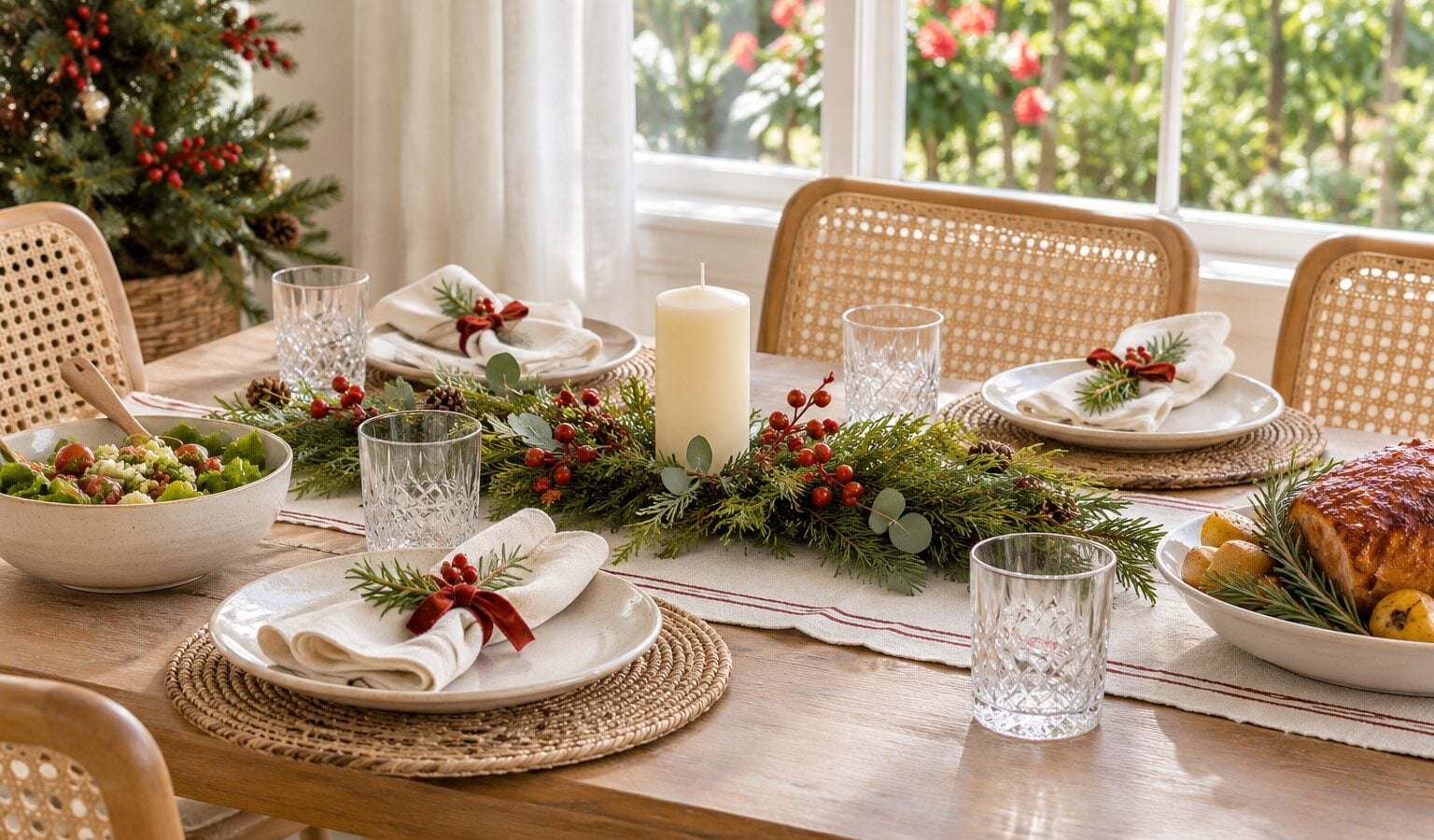
A small Christmas table works best when the decorations leave room for the people and the meal. Before choosing a centerpiece, put out the plates, glasses, and serving dishes you expect to use. The space left over is the space you can decorate.
A narrow arrangement, a repeated color, and a few well-placed details can create a festive table without making everyone move ornaments whenever a dish arrives. Use the layout below as a starting point and adapt it to the way your household eats.
Plan the Food Service First
Decide whether dishes will be served at the table or brought in already plated. Family-style serving needs space for bowls, platters, and the hands passing them. If the table is very compact, a sideboard or clear kitchen counter can hold extra dishes until they are needed.
Put an empty version of the largest serving dish on the table while you plan. Include a place for a water jug and any condiments that will actually be used. A centerpiece that fits only before the food arrives is not a practical centerpiece for that meal.
Choose One Narrow Centerpiece
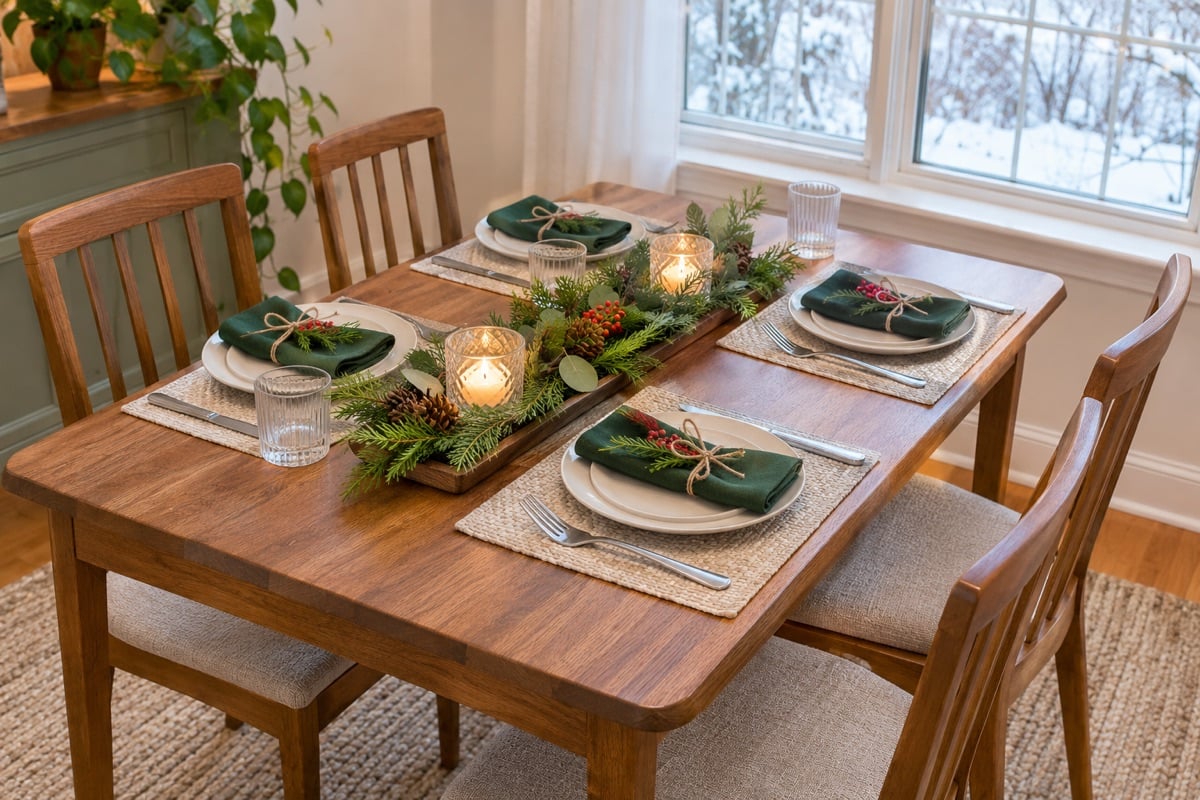
Use a short row of small containers, a single shallow bowl, or a narrow tray rather than a wide arrangement. A tray makes it easy to lift the decoration away if you need more serving space. Keep delicate pieces securely inside its edge.
Check the height from a seated position. People should be able to see one another comfortably across the table. A few small ornaments grouped low can provide more useful festive detail than a tall arrangement that divides the guests into separate sides.
Repeat a Color Instead of Adding More Objects
Choose one main festive color and repeat it in the napkins, name tags, or a small ribbon detail. Let ordinary plates and glasses remain part of the setting rather than trying to replace every item with a themed version.
- Red napkins with cream paper name cards and a small evergreen arrangement.
- White napkins with a few gold ornaments grouped on a narrow tray.
- Kraft paper place cards with wooden decorations and green ribbon.
- A mixed collection of plates connected by matching napkins or simple paper stars.
A color scheme is a way to connect existing things. If the family table includes different chairs, glasses, or crockery, a small repeated detail can make that variety look intentional.
Keep Each Place Setting Comfortable
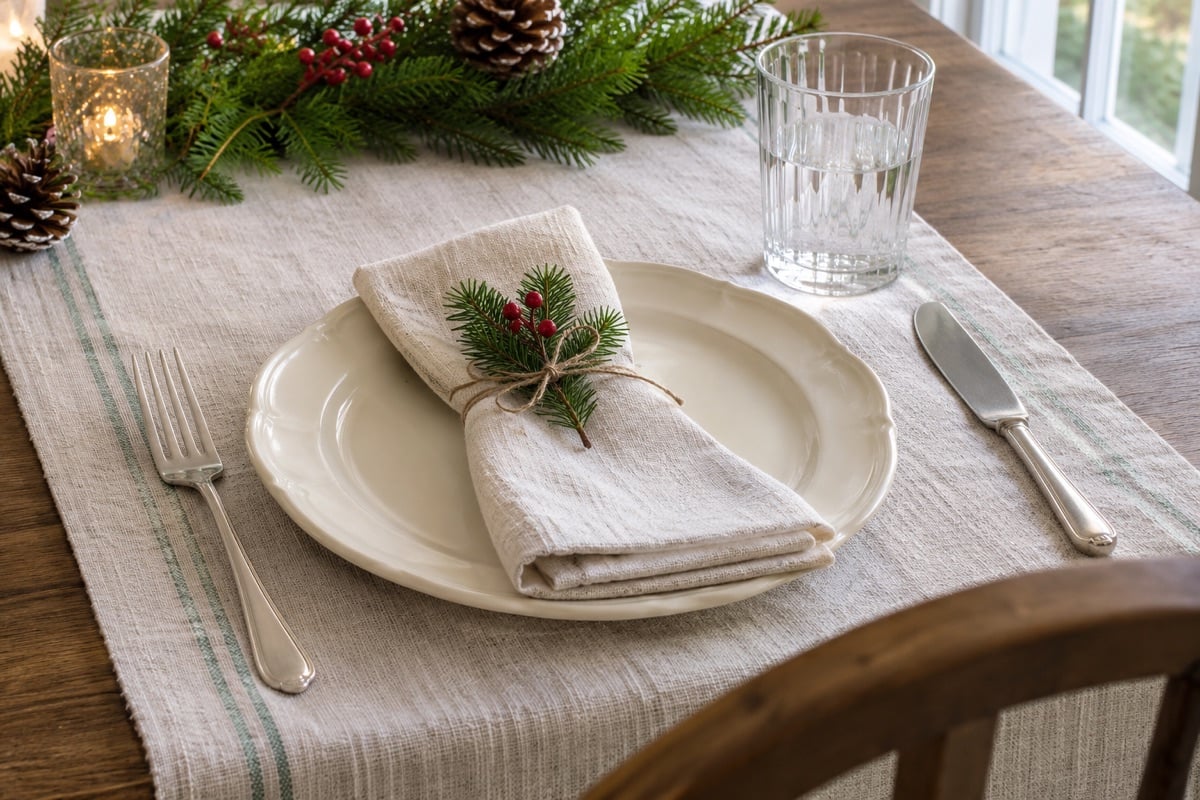
Set out the cutlery people will need and leave out extra pieces that only take up space. Fold napkins simply and place name cards where they can be read without lifting a glass. Check that chairs can move without catching on a long tablecloth or hanging decoration.
If a small gift sits at each place, choose one that can be moved easily to a lap, pocket, or side table. A woven paper heart can hold a small note, while a flat paper star can sit beside a name card. Keep any decoration separate from food.
Use Light Without Filling the Table
A small battery-powered light or two can add warmth without needing a large candle arrangement. Keep battery compartments secure around children, and keep electrical cables clear of plates, drinks, and moving chairs.
If you use real candles, follow the holder and candle instructions, keep them clear of decorations, and supervise them continuously. On a crowded table, choosing a flameless alternative can make it easier to concentrate on the meal and the people around it.
Make a Simple Test Setting
- Put out the plates, glasses, cutlery, and largest serving dishes.
- Add the water jug and any items that stay on the table throughout the meal.
- Place the proposed centerpiece in the remaining space.
- Sit down and check sightlines, elbow room, and whether dishes can be passed comfortably.
- Remove one decorative item if the setting feels crowded, then try again.
Take a quick photograph once the arrangement works. It gives you a practical reference when you set the table later, especially if the surface needs to be cleared for other jobs in the meantime.
Prepare Details Before the Day
Write place cards, check lights, and fold napkins ahead of time. Keep the table decorations together in one small box or tray so they do not become mixed with the wider decorating supplies.
For a wider approach to using what you own, see Christmas decorating on a budget. A small table looks welcoming when the decoration supports the meal rather than competing with it.


 How to Choose a Christmas Tree Color Scheme
