

A Christmas tree color scheme is a helpful starting point, not a rule that every ornament must follow. The colors can give a varied collection some visual rhythm while leaving space for handmade pieces, family keepsakes, and decorations chosen by children.
Start by looking at your existing ornaments in daylight. Pick the pieces you most want to use, then build a small palette around them. That approach usually creates a more personal tree than buying an entirely new set in one fashionable color.
Choose an Ornament or Material as Your Starting Point
A favorite glass bauble, a red ribbon, a wooden ornament, or a collection of paper stars can suggest the palette. Put that item beside a few other decorations and notice which colors already sit comfortably together.
Consider the room as well. A tree beside warm wood and cream textiles may suit rich red and gold, while a room with cool blue accents may make silver and white feel natural. You do not need to match every cushion; you are looking for a few colors that can repeat without competing.
Give Each Color a Simple Job
Choose one main color, a supporting color, and an optional accent. The main color appears often enough to establish a pattern. The supporting color gives contrast, while the accent can be limited to ribbon, a few special ornaments, or the topper.
There is no fixed percentage to measure. Lay out the decorations in loose groups and check whether the balance feels right. If one strong color appears only once, repeat it elsewhere or let it remain a deliberate focal point.
Try These Four Starting Palettes
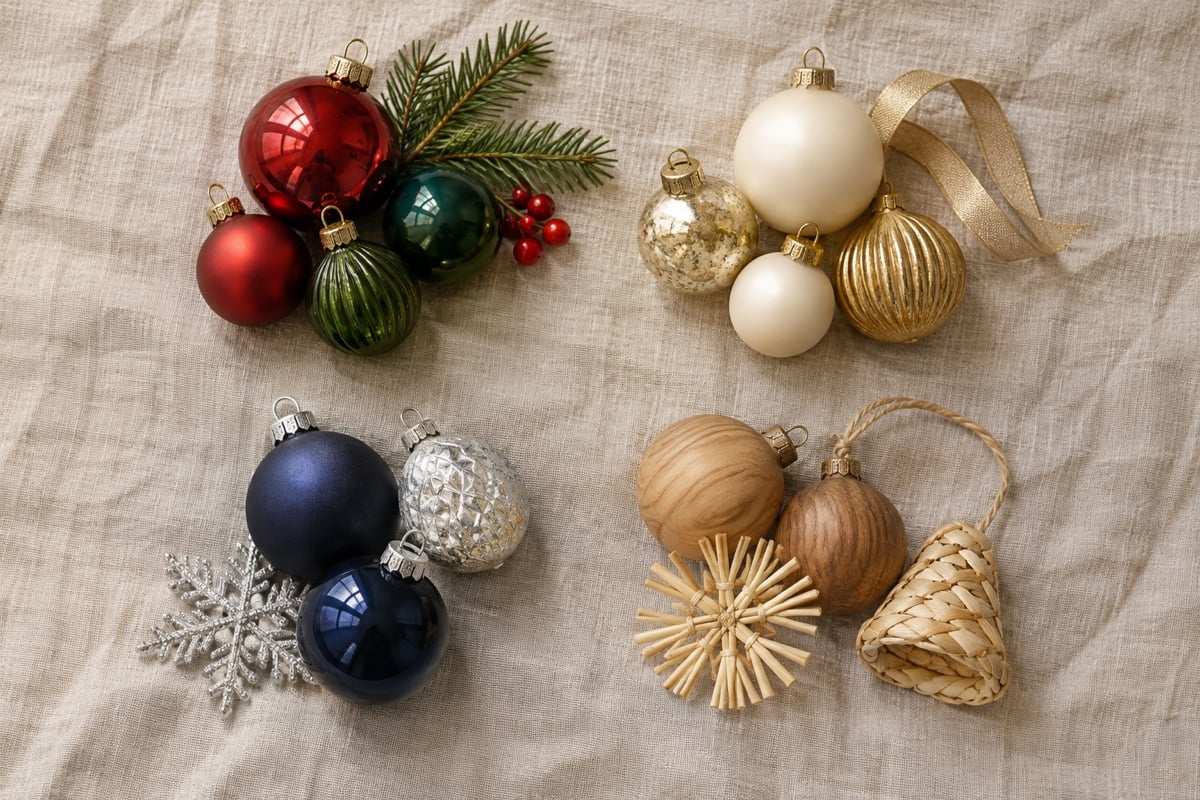
- Red, cream, and natural wood: useful with paper decorations, fabric ornaments, and a traditional green tree.
- White and warm gold: a restrained combination that can include glass, metallic finishes, and pale handmade pieces.
- Blue, silver, and white: a cooler palette that works best when the blue tones have a clear relationship.
- Evergreen, kraft paper, and muted red: a simple handmade look using plain materials and a few brighter accents.
Use these as a way to sort what you own, not as a shopping list. A sentimental decoration in another color can still belong on the tree. Repeating its material or shape nearby may help it feel connected to the rest.
Mix Finishes So One Color Does Not Feel Flat
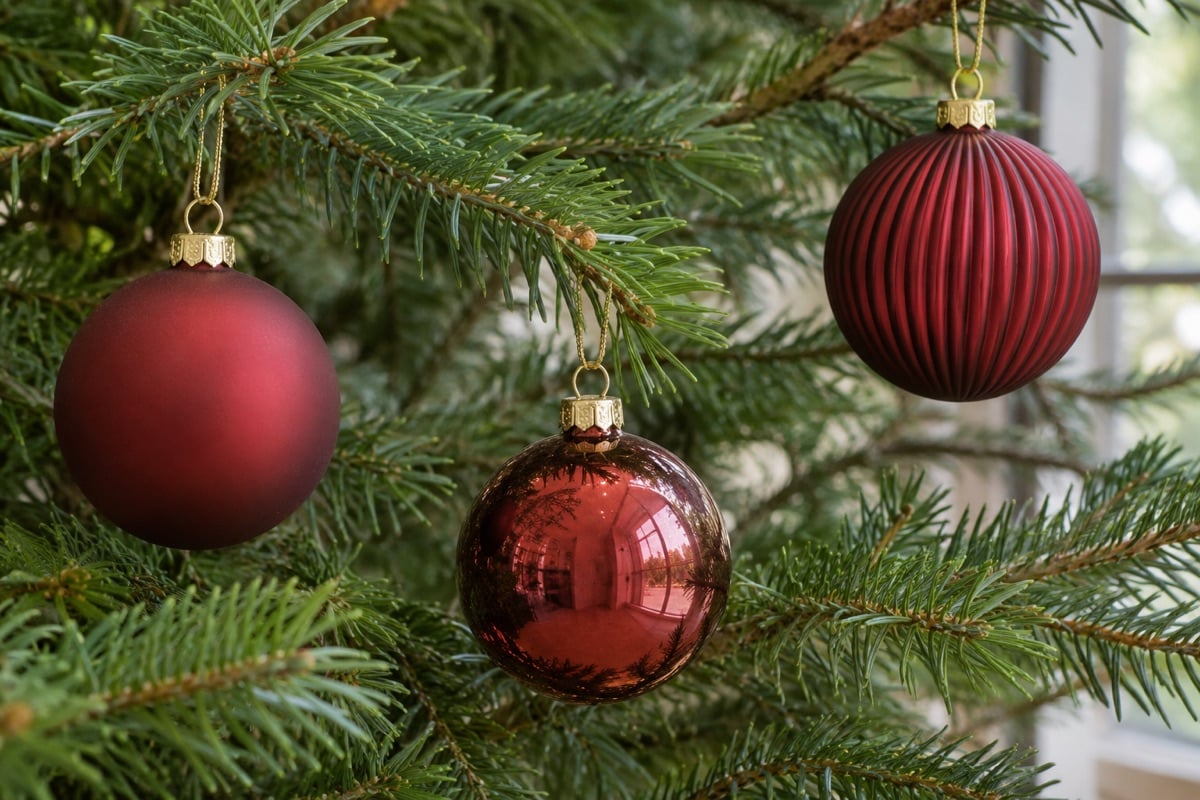
Matte, shiny, transparent, woven, and paper surfaces reflect light differently. Several red ornaments can look varied when some are velvet, some are glass, and some are folded paper. A single metallic finish can also connect colors that would otherwise feel unrelated.
Check glittery or highly reflective pieces under the tree’s actual lights. Something that looks subtle on the table can become a strong accent when illuminated. If the effect feels busy, space those pieces farther apart rather than removing every contrasting finish.
Use Ribbon and Handmade Decorations to Connect the Collection
A ribbon repeated in a few places can carry a color from the top of the tree to the lower branches. Keep its scale in proportion to the tree and avoid letting it hide ornaments you particularly want to see.
Homemade pieces are another way to repeat a palette without buying a large set. Try paper Christmas stars in two chosen colors, or use red and white woven paper hearts as a recurring detail among a more mixed collection.
Distribute the Colors Before Filling Every Gap
Place a few larger ornaments in different areas first, then spread the main and supporting colors through the remaining branches. Step back occasionally and look at the tree from the places where people will actually see it.
If one side looks noticeably darker or brighter, move a few pieces before adding more. Consider the depth of the branches as well as the surface. A little color farther inside the tree can keep the decoration from looking like a single flat layer.
Make the Palette Work for the Whole Family
Give treasured ornaments a visible place, even when they do not fit a strict scheme. You might use a small branch, a second display, or a clearly mixed section of the main tree, but avoid treating personal decorations as mistakes that need hiding.
For the order of decorating, including lights and larger pieces, see our guide to decorating a Christmas tree. A palette has done its job when it helps the collection feel settled while still looking like your Christmas.


 How to Start a Christmas Book Advent Tradition

