
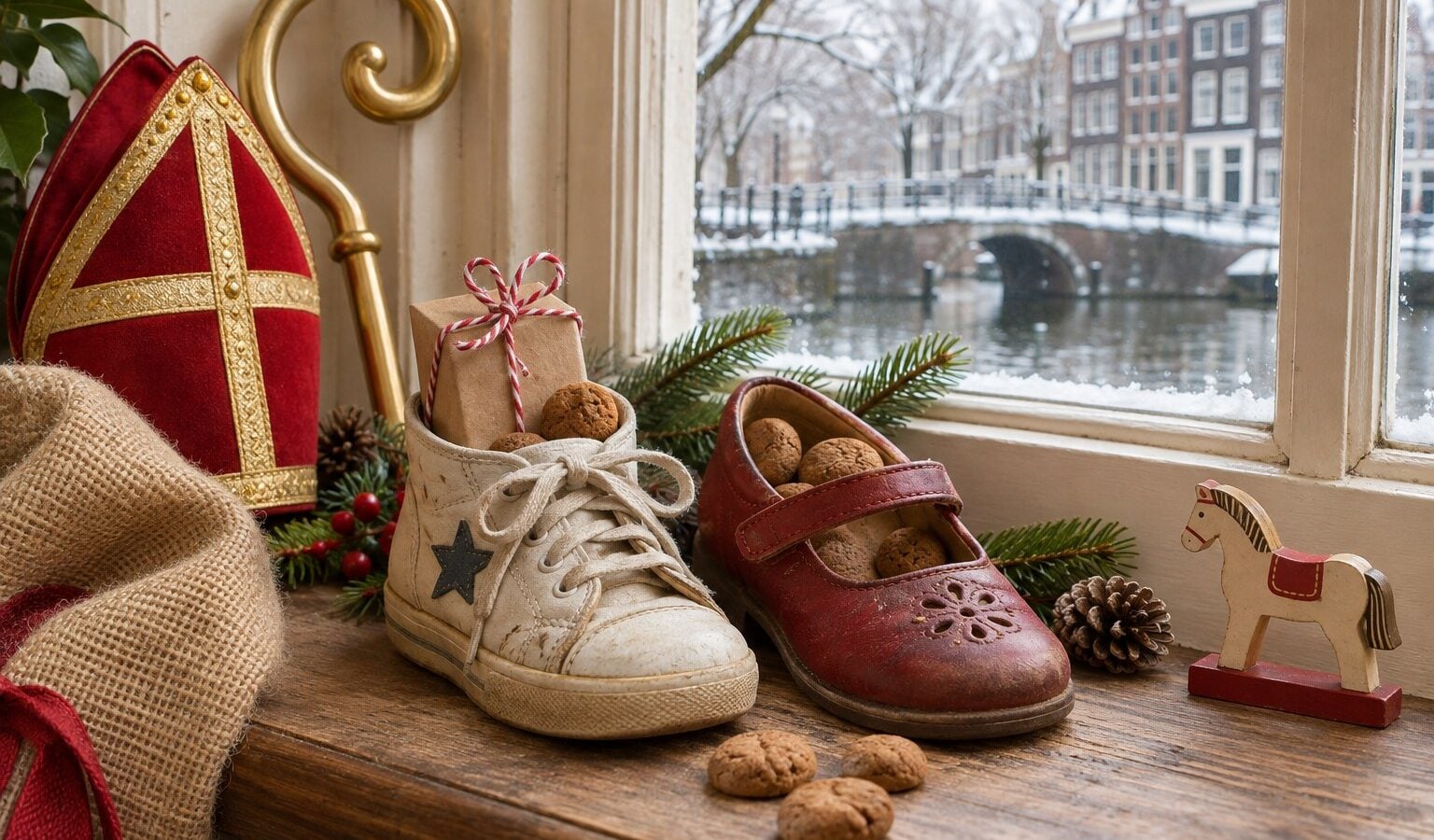
In the Netherlands, the weeks before Christmas include another much-loved celebration: Sinterklaas. Its central gift-giving evening is December 5, known as pakjesavond, the evening before Saint Nicholas’s feast day on December 6.
For an American reader, it helps to think of Sinterklaas as a separate seasonal tradition rather than simply another name for Christmas morning. Dutch families differ in how they mark both occasions, and there is no single schedule followed by every household.
Who Is Sinterklaas?
Sinterklaas is the Dutch Saint Nicholas figure, recognizable by a bishop’s mitre, staff, and long robes. In the familiar story, he travels from Spain to the Netherlands by steamboat. His arrival is called the intocht and is celebrated in many towns during November.
The arrival creates an opening to the season, with songs, crowds, and activities for children. Local events differ, and their dates should be checked for the particular year. The story’s geography belongs to the celebration’s folklore; it is not a literal account of the historical saint’s travels.
Leaving a Shoe for a Small Surprise
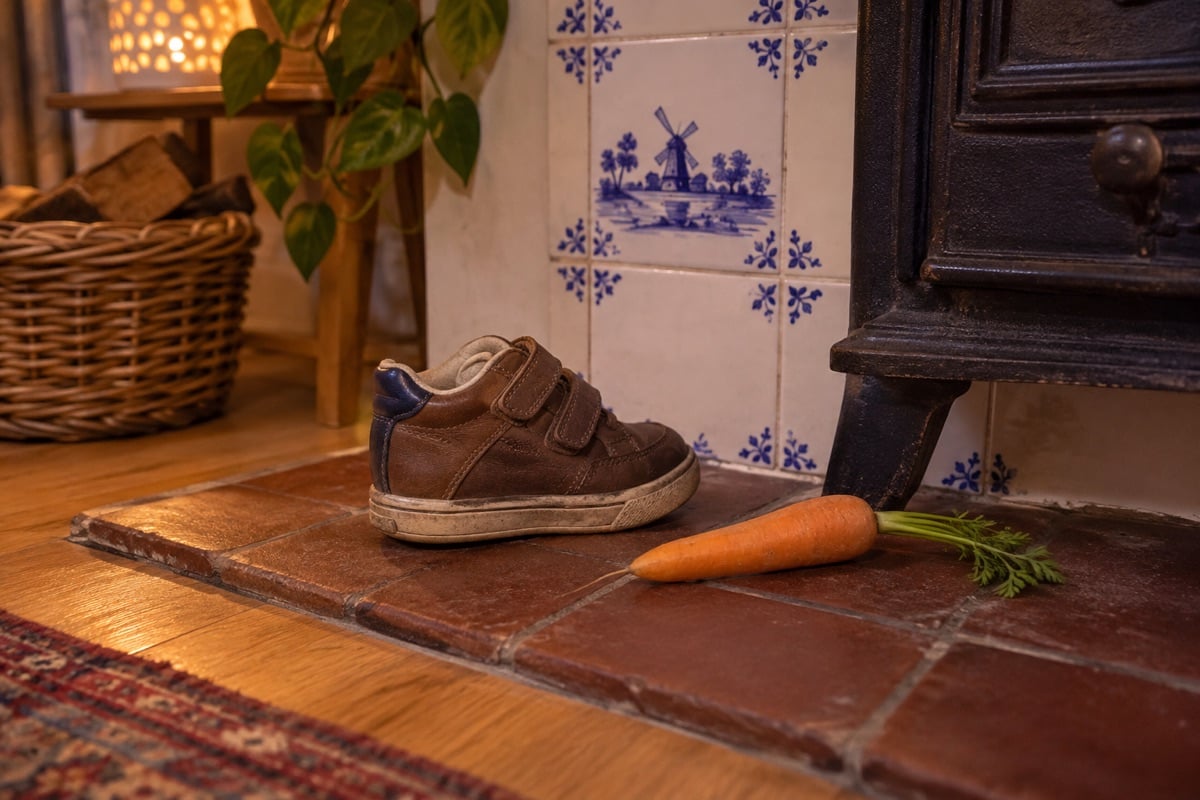
During the period before pakjesavond, children may put out a shoe in the hope of finding a small present or treat. A drawing for Sinterklaas or a carrot for his horse can accompany it. Songs are another part of the anticipation.
The shoe is often associated with a fireplace, but a window or another agreed place can work in a home without one. How often children put out their shoes is a household decision. It is better understood as a family ritual than as a requirement for a gift every night.
What Happens on Pakjesavond?
Pakjesavond is commonly the main evening for Sinterklaas presents in the Netherlands. Families may gather around a collection of packages, read messages, and reveal gifts together. The exact timing and degree of make-believe depend on the ages and preferences of the people celebrating.
This distinction matters when comparing countries. December 5 is central to the Dutch celebration, while December 6 is important in Saint Nicholas customs elsewhere. Similar figures and nearby dates do not mean that every country exchanges gifts in the same way.
Poems and Creative Surprise Packages
Older children and adults can take part through personal poems and imaginative wrapping. A gift may be hidden inside a handmade construction called a surprise. The fun lies in designing something around the recipient’s interests and disguising what is inside.
A gardener might receive a package shaped like a watering can, for example, while a keen reader could open a cardboard book. These are ideas for your own project rather than fixed traditional designs. The wrapping can become a playful part of the gift, with a short poem adding a personal clue.
If you borrow this idea for a family exchange, agree on a modest budget and keep the humor kind. A poem about a shared hobby is easier to enjoy than one that exposes a sensitive mistake or embarrasses its reader.
Spiced Treats Add to the Season
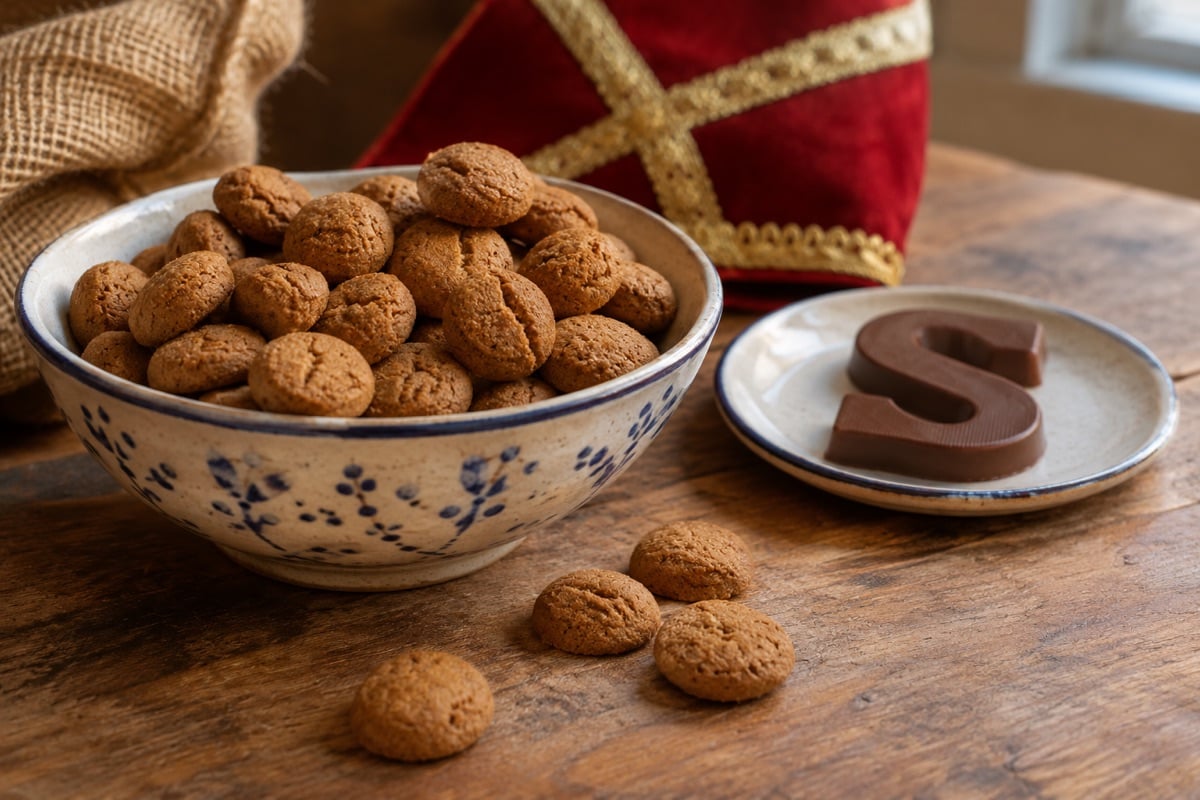
Small spiced biscuits and other sweets are familiar features of Sinterklaas celebrations. You may encounter the names pepernoten and kruidnoten, which are often discussed together but refer to different traditional treats. There are many modern variations as well.
Kruidnoten are the small, round, crunchy spiced biscuits often seen in bowls or bags. Traditional pepernoten are larger, irregular pieces with a chewy texture, commonly flavored with anise and honey. The names are often used loosely in everyday conversation, so checking the description is useful if you want to try both.
For a simple introduction at home, choose a Dutch spiced treat and learn its name rather than presenting every cinnamon cookie as interchangeable. If you are sharing food with guests, check the ingredients and use suitable separate portions for anyone with dietary needs.
A Living Tradition with Different Family Versions
The portrayal of Sinterklaas’s helpers, especially Zwarte Piet, has been debated because blackface makeup and exaggerated features can reinforce racist caricatures. Many celebrations have changed to helpers with a few soot marks, known as roetveegpieten, instead of fully darkened faces. Practices still vary, so an older illustration may look quite different from a contemporary local event.
You can explore the gentler gift customs through a shoe display, a homemade poem, or a creative package. Explain which elements come from the Netherlands and which are your own adaptation. If children want to write to a seasonal gift giver, our letter-writing ideas provide prompts that can be adjusted to the story your family follows.
The most useful comparison is the way both celebrations build anticipation and encourage thoughtful giving. Understanding their different names and dates makes the similarities more interesting, while preserving what makes Sinterklaas distinctive.


 How to Make a Christmas Wish List That Helps Your Family
