
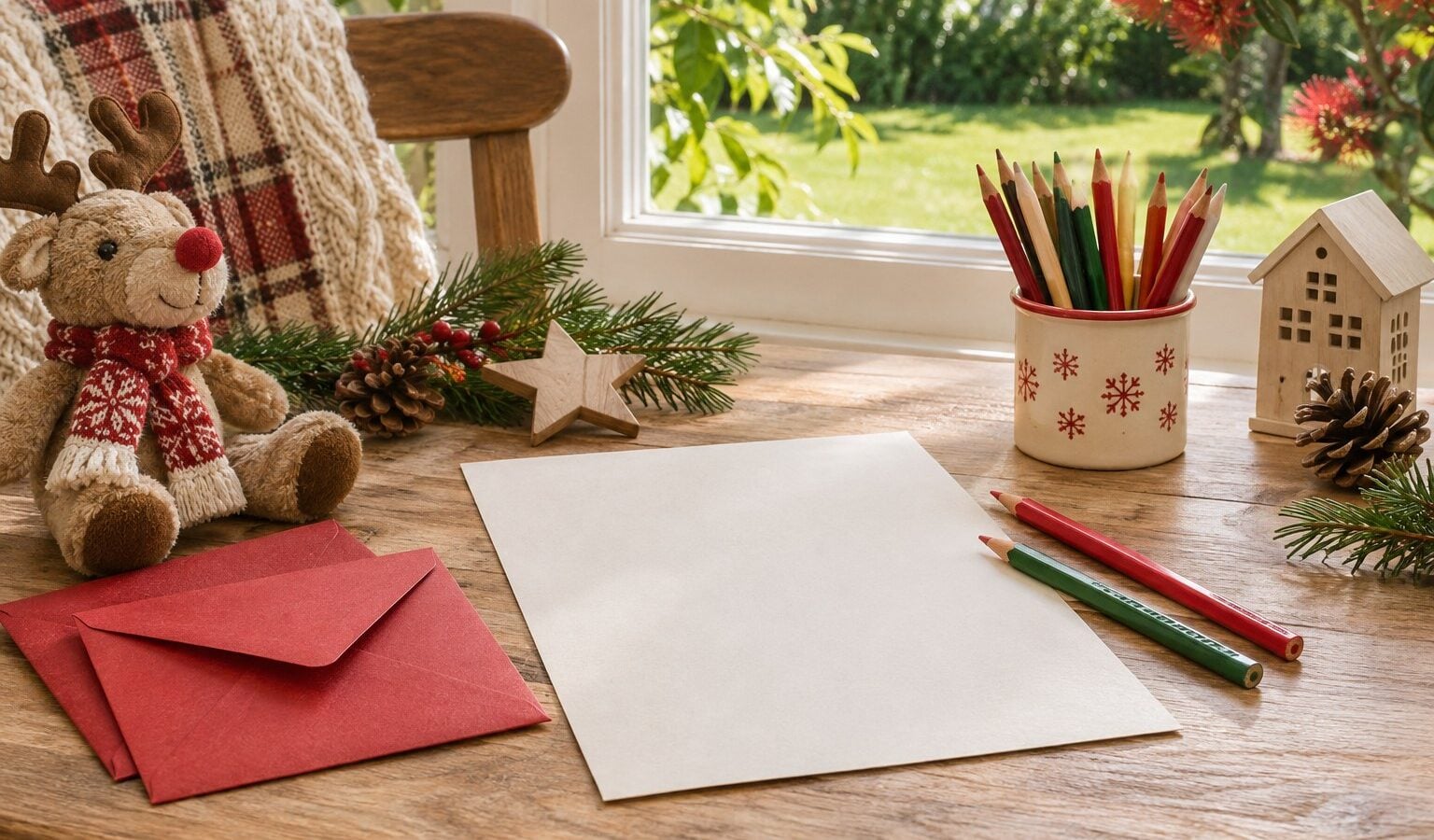
A Christmas letter to Santa can be more than a list of presents. It can hold a drawing, a favorite memory, a question, or a few thoughts about the people a child cares about. The most enjoyable letter sounds like the child who made it, even if an adult helps with the writing.
Set out ordinary paper and pencils, then let the child choose whether to write, dictate, draw, or combine all three. A short letter they enjoyed making is more meaningful than a polished page they felt obliged to finish.
Begin with a Friendly Greeting
Start with a simple greeting and one thing the child wants to share. They might describe a new hobby, a book they enjoyed, or something they are looking forward to. An adult can write down their exact words without turning them into more formal language.
For a child who is unsure how to begin, offer two or three possible topics rather than a complete script. Ask what Santa might like to know about their year, then follow the direction the child chooses.
Use Prompts That Go Beyond Presents
- What was one happy moment from your year?
- What have you learned to do that you could not do before?
- Who helped you with something important?
- Which Christmas activity would you like to do together?
- What question would you like to ask Santa?
- What would make someone else in your household smile?
- Which story or song would you recommend?
- What would you draw to show the place where you live?
- What small kindness would you like to try?
- What are you hoping to remember about this Christmas?
Use only the prompts that interest the child. This is not a questionnaire that needs every box completed. A drawing of a favorite family activity may tell a fuller story than several carefully corrected sentences.
Keep Gift Wishes Clear and Manageable
If the letter includes gift wishes, help the child describe a few ideas rather than copying an enormous list. A general interest can be useful: drawing materials, a puzzle, or a story about a favorite subject leaves room for a thoughtful choice.
Avoid presenting gifts as a reward that proves a child has been good enough. Families have different budgets and different ways of celebrating. Keep the conversation warm and realistic, following the language and traditions that fit your household.
Try This Simple Letter Shape
- A greeting to Santa.
- One or two sentences about the child’s year.
- A favorite memory, question, or drawing.
- A small selection of gift ideas, if the child wants to include them.
- A kind thought or festive wish for someone else.
- A closing and the child’s name or chosen signature.
Children who are learning to write can contribute a greeting, their name, or a few labels while an adult helps with the rest. Let invented spelling and uneven handwriting remain where the child is comfortable with them. The letter is a record of a moment, not an exercise that needs a mark.
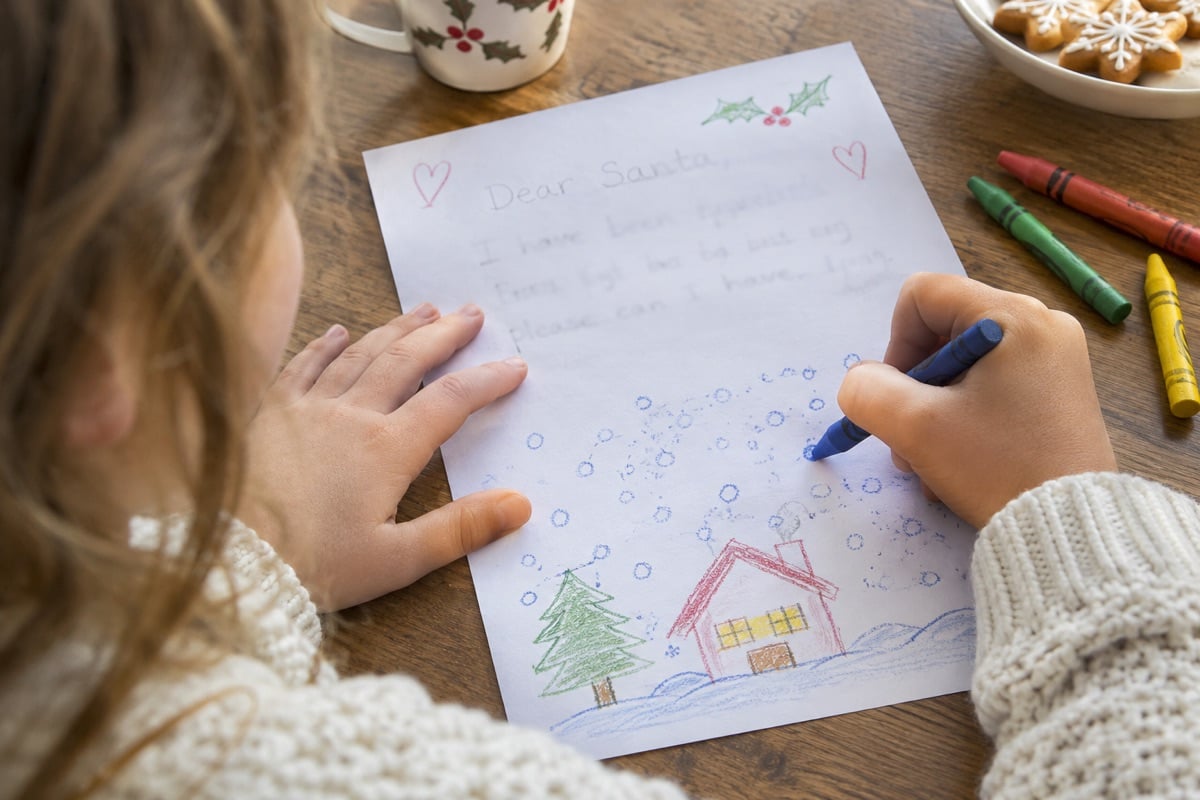
A short example might read: “Dear Santa, this year I learned to ride my bike. I liked our walk to see the Christmas lights. How do the reindeer keep warm? I would enjoy some coloring pencils or a book about space. I hope Grandma has a lovely Christmas too. Love, Sam.” A child can borrow the shape while choosing completely different memories and wishes.
Make the Drawing Part of the Message
Leave a generous space for a picture rather than treating it as a small decoration after the writing is finished. A child might draw a Christmas tree, a favorite toy, their family, or a scene from an imagined visit to the North Pole.
If you are making an envelope, keep its decoration flat enough that it will close properly. For a letter kept at home, a simple paper pocket or folder can hold the drawing and any extra notes without needing a formal envelope.
Decide Where the Letter Will Go
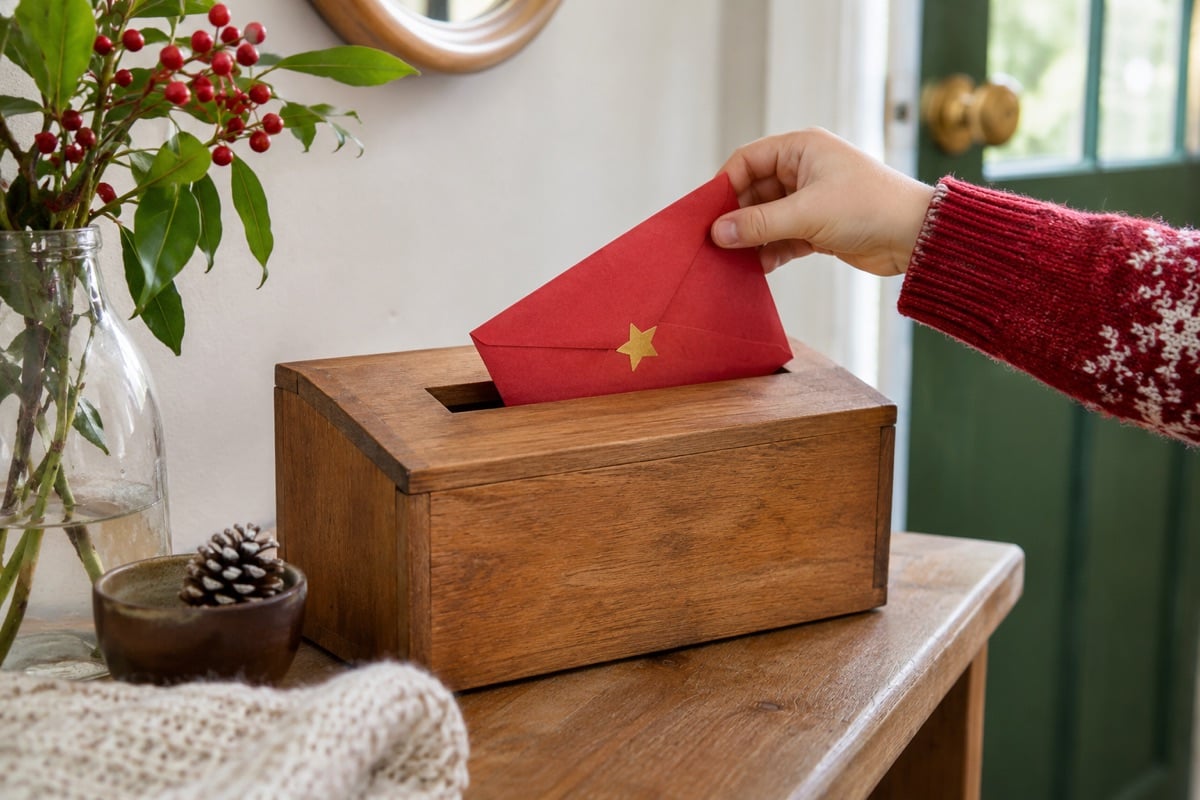
Some families keep letters at home, place them by a tree, or use a particular family tradition. If you plan to send a letter through a postal program, an adult should check its current arrangements, address, deadlines, and any reply requirements before making a promise.
Do not put a child’s home address, school, contact details, or other private information into a photograph shared publicly. If you want to share the artwork, choose a view that leaves those details out and make sure the child is comfortable with it.
Keep a Copy as a Christmas Memory
A photograph or saved copy can become part of a small Christmas memory collection. Write the year on the back and let the child choose whether the original is kept. Looking back later often reveals interests and phrases that would otherwise be forgotten.
For another quiet countdown activity, try a Christmas book Advent tradition or choose an idea from our family Advent activities. Keep the letter-writing afternoon as flexible and personal as the letter itself.


 Christmas Window Decorations for a Rented Home
