
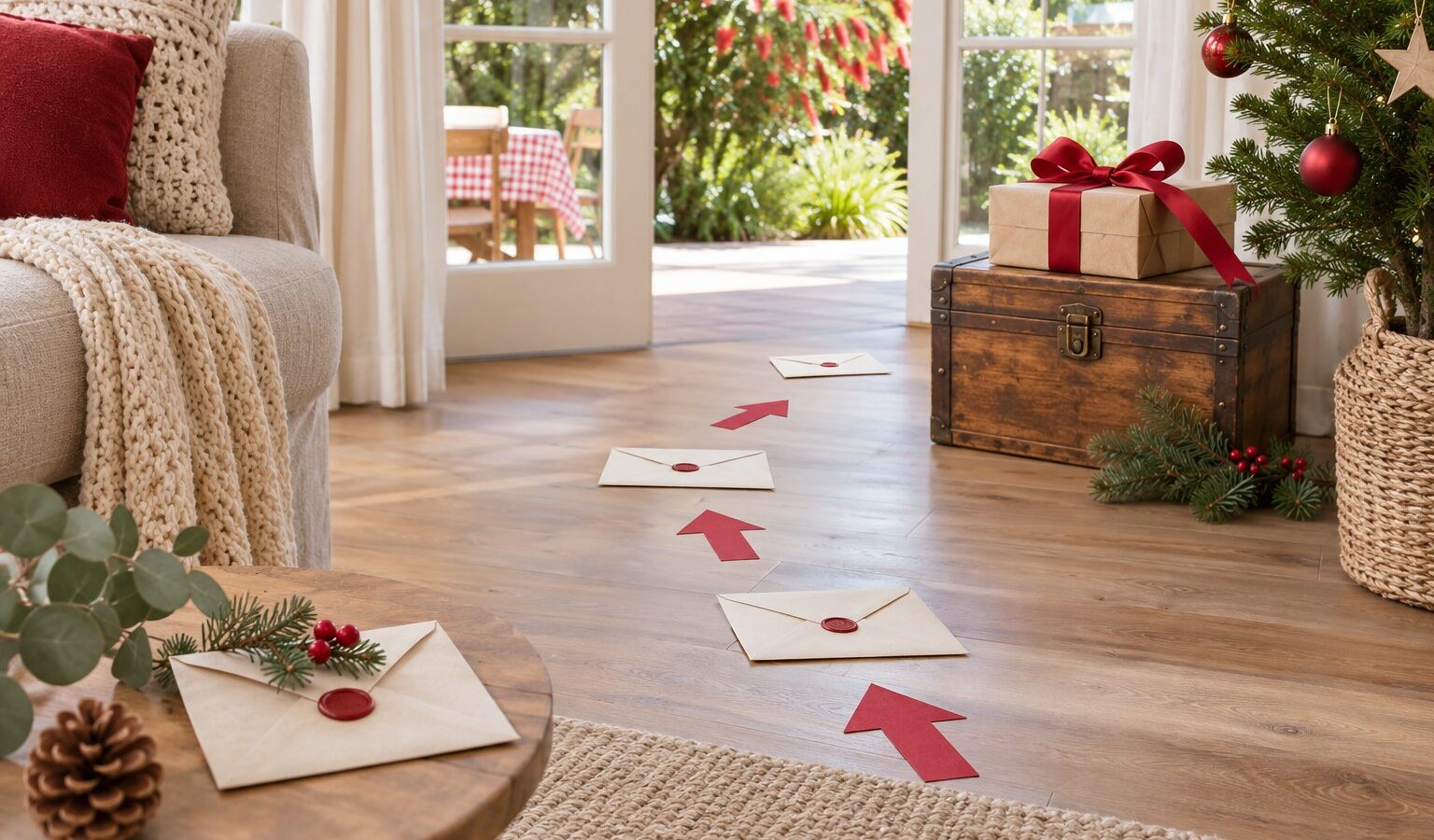
An indoor Christmas treasure hunt can turn a familiar room into a short adventure. The best version has a clear route, clues the players can understand, and a finish everyone can enjoy together. It does not need a large house or an expensive prize.
Start with a route through safe, accessible places. Keep clues away from appliances, stairs, medicines, cleaning products, private drawers, and anything fragile. The sample hunt below uses ordinary household landmarks and can be shortened or adapted.
Decide Who Is Playing and What the Finish Will Be
A group of young children may enjoy searching together with an adult reading the clues. Older players might work in pairs. Mixed-age teams help when the hunt includes both reading and looking carefully at a room.
Choose a shared finish before writing the route. It might be a small wrapped box of game cards, a book to read together, or the ingredients for a planned activity. If you use individual prizes, make sure every player has something suitable at the end.
Write the Route Before Hiding Anything
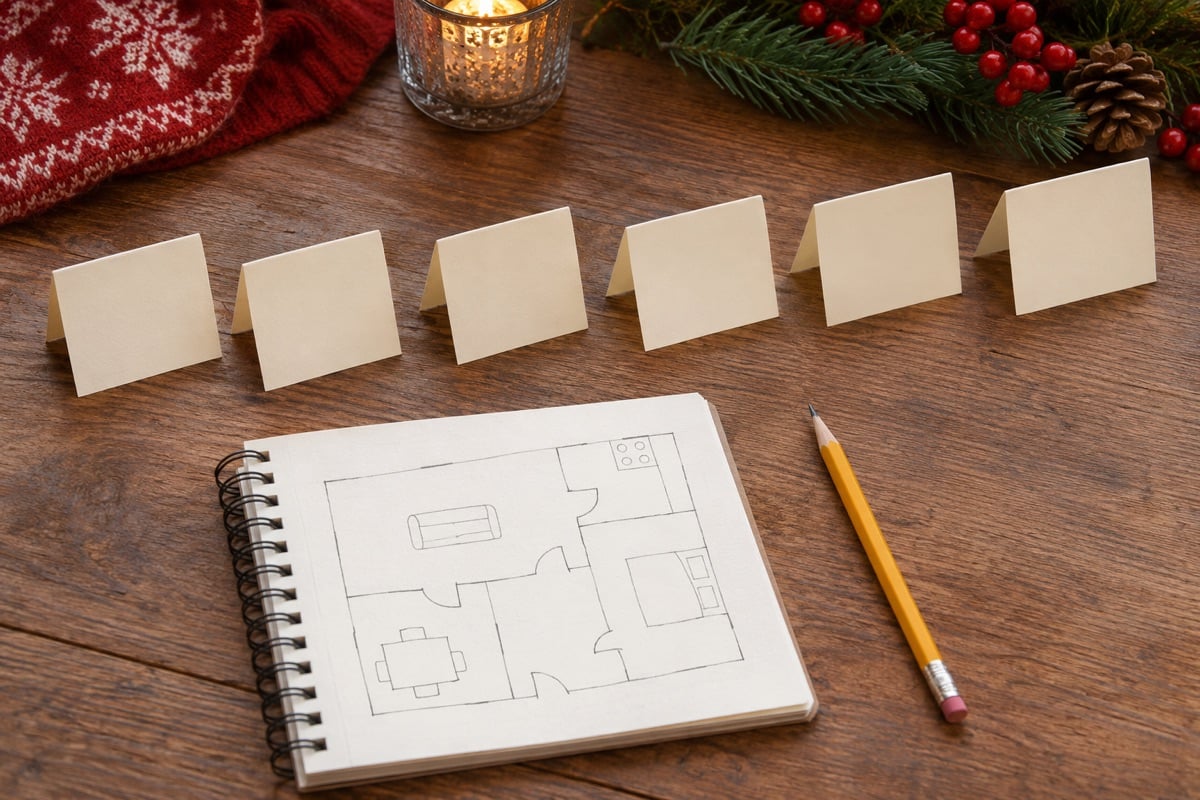
List the hiding places in order and check that each one is available. The players receive clue one at the start; its answer tells them where to find clue two. The final answer leads to the treasure, not another missing piece of paper.
Set up backward to avoid putting a clue at its own answer: place the treasure beside the tree, clue 6 by the coats, clue 5 at the table, clue 4 on the sofa, clue 3 by the shoes, and clue 2 at the bookshelf. Keep clue 1 in your hand to give the players. This setup list matches the six clues below; update it if you change a destination.
Number the clue backs for the organizer and keep a copy of the route. This makes setup easier and helps you recover quickly if someone finds a later clue by accident. Put clues beside or beneath safe objects without requiring climbing or moving heavy furniture.
A Complete Six-Clue Christmas Hunt
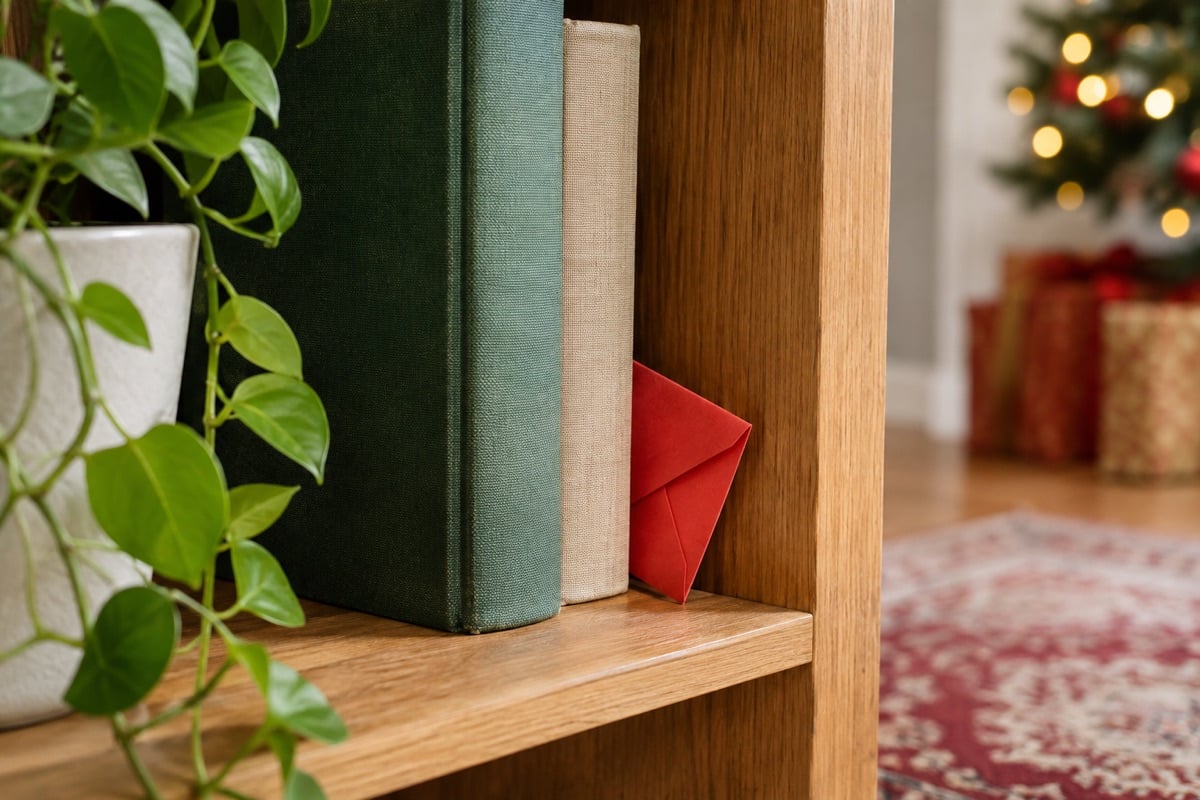
- Clue 1: ‘Stories and pictures stand close in a row. Find where the books in this house like to go.’ Hide clue 2 at the bookshelf.
- Clue 2: ‘Before we go out, these help with our feet. Look where the shoes wait, tidy and neat.’ Hide clue 3 beside the ordinary shoe storage.
- Clue 3: ‘A soft place to sit when the long day is through. Look by the cushions for something for you.’ Hide clue 4 on the sofa where it is easy to reach.
- Clue 4: ‘We gather here often with plates in a row. Your next little message is where meals can go.’ Hide clue 5 on or safely beneath the dining table’s edge.
- Clue 5: ‘When coats come indoors from the cold or the rain, they wait in this place till we need them again.’ Hide clue 6 beside the coat hooks or coat stand.
- Clue 6: ‘Your searching is finished; the last place to see is beside our bright, festive Christmas tree.’ Put the treasure beside the tree, clear of cables and breakable decorations.
Change any landmark that does not exist in your home. Read the revised route from start to finish after making a change, because swapping one destination affects where the following clue needs to be placed.
Adjust the Clues for Different Players
For younger children, add a simple drawing of the destination or use a photograph of the safe hiding area. Two or three clues may be enough. Let an adult give a gentle hint rather than allowing frustration to become the main part of the activity.
For older players, add a small puzzle to a few clues: a short anagram, a missing letter, or a simple counting task. Keep the route itself clear. One difficult puzzle can be entertaining; six obscure clues can bring the whole hunt to a halt.
Run a Quick Setup Check
- Are all players allowed to enter every room on the route?
- Can every clue be reached without climbing or moving something heavy?
- Does the answer to each clue lead to the next clue’s actual location?
- Are the paper clues clear of heat, water, pets, and small children who are not playing?
- Is the final treasure ready before the first clue is handed out?
Walk the route yourself once. This usually catches problems faster than rereading the clues while sitting at the table.
Let the Hunt Lead into Another Activity
Keep the ending simple and give everyone a chance to help open or reveal the treasure. A shared activity can make the finish feel like the beginning of the next part of the gathering rather than a competition over who reached the box first.
You could finish with Christmas trivia, a story, or supplies for woven paper hearts. Save the route and note which clues worked so a future hunt is easier to prepare.


 40 Christmas Conversation Starters for the Dinner Table
